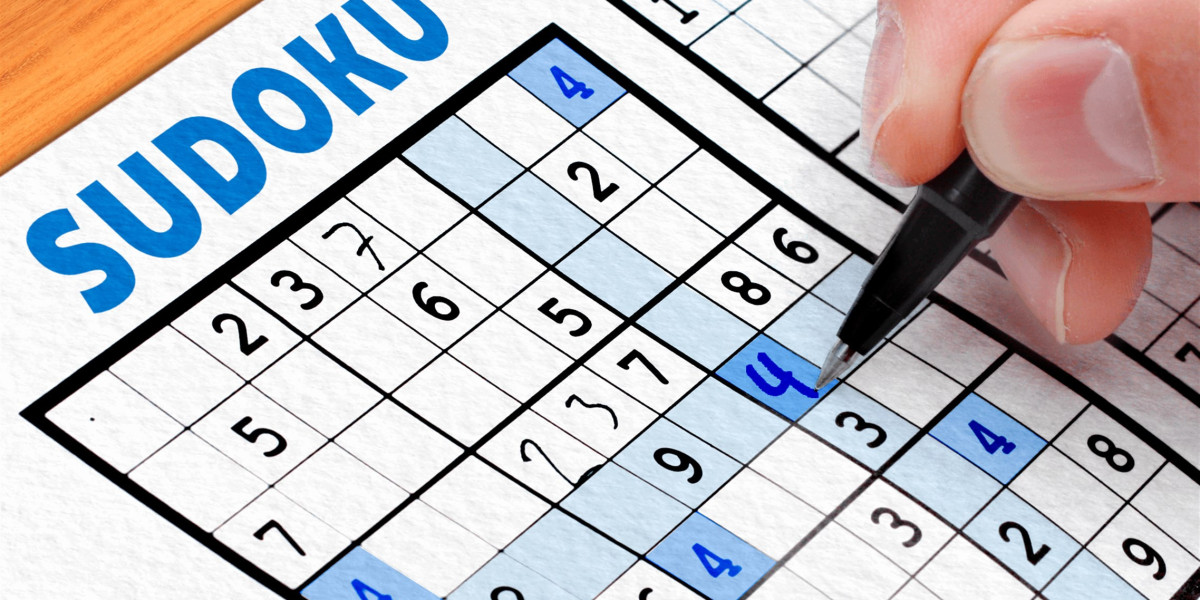

I used to think I was a “pretty logical person.”
You know, the kind who enjoys organizing things, making lists, spotting patterns. So when I first got into Sudoku, I assumed I’d be naturally good at it.
Spoiler alert: I was not.
In fact, one particular puzzle humbled me so badly that I had to put my phone down and stare at the ceiling for a solid two minutes. But strangely enough, that’s exactly why I fell in love with it.
It Started as a Casual Habit
At first, Sudoku was just something I did while waiting.
Waiting for food.
Waiting for a friend.
Waiting for sleep to arrive.
It felt productive in a low-pressure way. Instead of scrolling social media and forgetting everything five minutes later, I was actually using my brain.
I began with easy levels, of course. Those were comfortable. Almost relaxing. Fill in obvious numbers, complete rows quickly, feel mildly accomplished.
But comfort has a way of becoming boring.
So naturally, I leveled up.
Overconfidence Is Dangerous
The first time I tried an expert-level grid, I thought, “Okay, how different can it really be?”
Very different.
The board was almost empty. Just a few lonely numbers scattered around like breadcrumbs. I scanned the first row. Nothing obvious. Checked a 3x3 box. Still nothing.
I told myself to stay calm.
I started adding notes to empty cells — tiny possibilities penciled into corners. At first, it felt methodical. Controlled.
Then the grid turned into chaos.
Every cell had three or four potential numbers. My clean board now looked like mathematical graffiti. I couldn’t see patterns anymore. Just noise.
That was the moment frustration hit.
The Mental Battle
What I didn’t expect from Sudoku was how psychological it can feel.
It’s not just about numbers — it’s about doubt.
“Did I miss something simple?”
“Am I overthinking this?”
“Is this puzzle actually impossible?”
There’s a very specific kind of annoyance that comes from knowing the solution exists… but you just can’t see it yet.
I remember leaning back in my chair and laughing at myself.
It’s just a puzzle. Why am I emotionally invested?
But I was.
Because quitting felt like admitting defeat.
The Breakthrough Moment
After about 30 minutes of going in circles, I did something different.
Instead of scanning randomly, I chose one single 3x3 box and focused only on that. I ignored the rest of the grid. I asked a simple question:
“What absolutely cannot go here?”
I started eliminating possibilities one by one. Slowly, the clutter reduced. One cell narrowed down to just a single number.
When I placed it, something magical happened.
That one number unlocked another.
And then another.
And then an entire column suddenly made sense.
It felt like turning on a light in a dark room.
That domino effect is the most addictive part of Sudoku. One logical step leads to another, and suddenly the puzzle that seemed impossible becomes solvable.
Why Finishing Feels So Good
When I finally completed that expert grid, I didn’t cheer. I didn’t post about it.
I just sat there smiling at my screen.
It wasn’t about proving anything to anyone. It was about knowing I stayed with something difficult long enough to understand it.
That feeling is rare.
We live in a world where we abandon things quickly. If something doesn’t entertain us instantly, we swipe away. If something feels hard, we switch to something easier.
But Sudoku doesn’t reward impatience.
It rewards persistence.
And that’s why finishing a tough board feels meaningful. You didn’t win because of speed or luck. You won because you thought carefully.
A Funny (Slightly Embarrassing) Story
One time, I was playing during a family gathering. Everyone was chatting loudly, and I was sitting quietly in the corner, deep in concentration.
My cousin walked over and asked, “What are you doing?”
Without looking up, I said, “Wait. This is important.”
Important. Over a grid of numbers.
He laughed and said, “You look like you’re defusing a bomb.”
Honestly? It felt like that.
But when I solved the final cell and finally looked up, I felt ridiculously proud. Over something so small.
That’s the charm of Sudoku. It creates tiny, private victories that only you fully understand.
What It Taught Me About My Brain
Playing regularly has made me more aware of how I think.
I noticed that when I rush, I make mistakes.
When I get impatient, I overlook obvious details.
When I panic, I stop seeing patterns.
But when I slow down, breathe, and approach the grid calmly, everything becomes clearer.
That lesson applies outside the puzzle too.
Instead of reacting quickly to problems, I try to step back.
Instead of guessing solutions, I look for constraints.
Instead of assuming something is impossible, I ask, “What am I missing?”
It’s amazing how much a simple number game can teach you.
My Current Ritual
These days, solving a Sudoku puzzle is part of my routine.
Sometimes it’s five minutes in the morning with coffee.
Sometimes it’s a longer session before bed.
I don’t always choose the hardest level anymore. I play based on my mood.
If I want something relaxing, I go moderate.
If I want a mental workout, I choose expert.
Either way, it feels like mental stretching.
A way to clear out noise and focus on something structured and solvable.
Why I Think Everyone Should Try It
You don’t need to be “good at math.” You don’t need special skills.
You just need patience.
Sudoku isn’t about calculations — it’s about logic and pattern recognition. It’s about slowing down in a world that constantly speeds up.
And maybe that’s why it sticks with people.
It’s simple.
It’s fair.
It challenges you without overwhelming you — once you learn to approach it calmly.