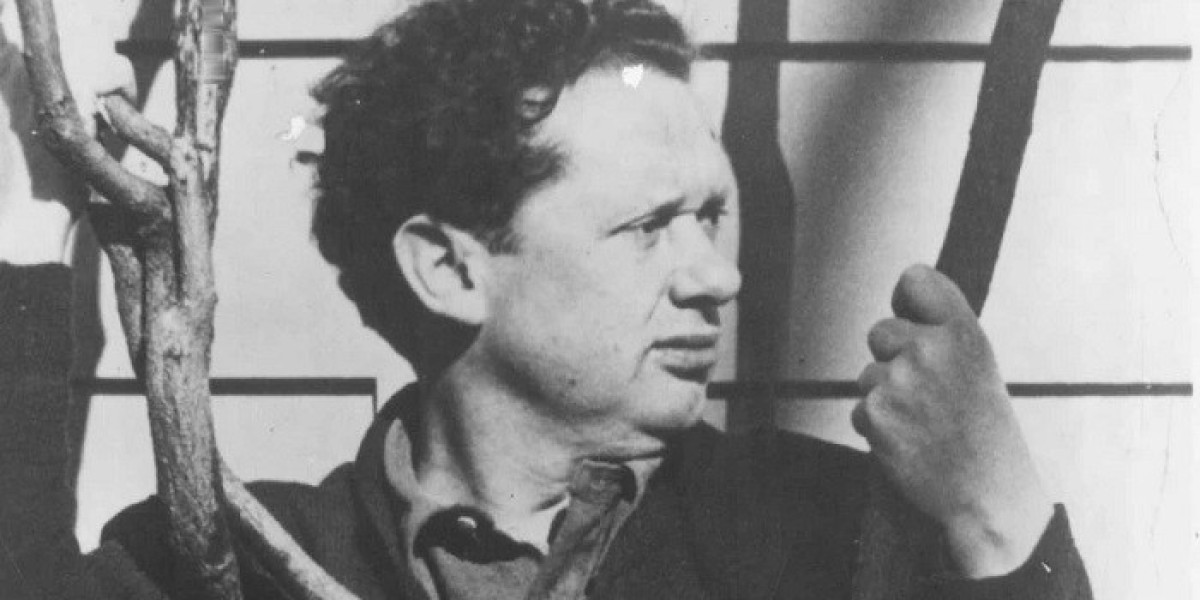

Dylan Thomas remains one of the most distinctive poetic voices of the twentieth century, celebrated for his lush musical language, hypnotic imagery, and emotionally charged explorations of life’s deepest mysteries. His work is not driven by abstract philosophical argumentation but by an intuitive, visceral engagement with existence—birth, death, memory, desire, and the cyclical rhythms of nature. Through symbolic landscapes, mythic resonances, and a childlike wonder that matures into existential questioning, Thomas develops a poetic worldview that is both celebratory and tragic, luminous and shadowed. His philosophical ideas emerge through sound, metaphor, and narrative rather than systematic reasoning, making his poetry a sensory gateway into questions that define the human condition.
The Philosophy of Life and Death in Thomas’s Work
Mortality as Both Inevitable and Transformative
One of the most pervasive philosophical themes in Dylan Thomas’s poetry is the contemplation of mortality. Rather than treating death purely as an ending, he often presents it as a transformation—a natural continuation of the cosmic cycle of life. In poems such as “And Death Shall Have No Dominion,” Thomas imagines death not as annihilation but as a moment in which human identity dissolves into a broader universal order. This vision reflects a pantheistic or mythopoetic philosophy, where the boundaries of selfhood blur into something eternal.
At the same time, Thomas does not romanticize death. His poetry acknowledges its pain, its terror, and its power to separate loved ones. The tension between acceptance and resistance becomes especially evident in “Do Not Go Gentle into That Good Night,” where the poet urges defiance against the dying of the light. This poem reveals a deeply humanist philosophy: life, despite its impermanence, is worth struggling to preserve, and consciousness itself becomes a precious flame. Thomas holds two truths simultaneously—death is inevitable, yet the human spirit is defined by its refusal to surrender quietly.
The Cyclical Nature of Existence
Thomas frequently situates life and death within cycles of nature. Rivers, tides, seasons, and celestial movements show that everything transforms but remains connected. This cyclical philosophy implies that mortality is part of a larger pattern. Even decay is generative; from the dying of one season arises the birth of another. In his winter imagery, especially in the poem “A Winter’s Tale,” death seems intertwined with a dormant beauty that prefigures renewal.
This philosophy of cycles reflects both mythic and ecological thinking. Thomas’s nature is not a mere setting but a metaphysical force—one that suggests that human beings participate in the same eternal rhythms as forests, tides, and stars. The result is a worldview in which change is constant but not purely destructive; it is the mechanism through which life continues beyond the individual.
The Philosophy of the Self and Human Consciousness
The Childlike Consciousness as a Lens of Wonder
Another philosophical dimension of Dylan Thomas’s poetry lies in his treatment of childhood as a state of heightened awareness. For Thomas, the child perceives the world with immediacy and wonder, unfiltered by the cynicism and abstraction that adulthood often brings. This idea is explored powerfully in “Fern Hill,” where childhood appears as a luminous golden age—full of freedom, sensory richness, and oneness with nature.
Philosophically, this perspective aligns with Romantic and phenomenological views of consciousness. Thomas suggests that the purest form of human experience arises when perception is direct and unmediated. As adulthood arrives, the world becomes more structured, responsibilities accumulate, and time begins to tighten its grip. The child’s awareness fades, leaving behind both nostalgia and an ache for lost innocence.
Memory as a Bridge Between Past and Present
Memory in Thomas’s poetry is not merely recollection but a philosophical bridge between temporal states of being. It functions as a medium through which the poet revisits earlier selves, unraveling the complexity of personal identity through time. In “Poem in October,” the speaker walks through nature and relives layers of his past, suggesting that identity is not linear but accumulative.
This emphasis on memory suggests a philosophy where the self is an evolving composite, shaped by what has been, what is felt in the present, and what remains anticipated or feared. Thomas views memory as a sanctuary but also as a haunting force, reminding us of time’s irreversible passage. Yet through poetry, memory becomes a kind of immortality, preserving moments otherwise vulnerable to disappearance.
The Philosophy of Nature as Sacred and Living
Nature as a Source of Spiritual Immanence
Nature in Dylan Thomas’s poetry is rarely symbolic in a reductive sense; instead, it is a living, breathing force, imbued with sacred energy. Thomas frequently draws connections between natural processes and spiritual states, presenting a philosophy of immanence in which divinity resides within the physical world rather than above or beyond it.
This is particularly clear in the imagery of trees, rivers, and animals, which often reflect human emotions and inner states. Nature becomes a mirror for the soul, revealing both its vitality and its vulnerability. This approach suggests a worldview where humanity and nature are inseparable, part of a single organismic reality animated by shared energies.
The Unity of All Living Things
Thomas often hints at a metaphysics where all life is interconnected. His poetry blurs distinctions between human and nonhuman, suggesting that identity flows across species and forms. This unity emerges through metamorphic imagery—men turning into trees, voices merging with wind, bodies dissolving into landscapes. Such dissolutions indicate a philosophy akin to pantheism or deep ecology, where creation is one vast, interconnected tapestry.
This unity also imbues Thomas’s work with a sense of compassion; if all life is interconnected, then suffering and joy are shared across the boundaries we imagine separate us. This view deepens his engagement with mortality, as death becomes a return to this collective oneness.
The Philosophy of Language and Creation
Poetry as Incantation and Revelation
Dylan Thomas’s relationship with language itself reveals a unique philosophical stance. He treats language not merely as a vehicle for meaning but as a living force with magical and generative power. His poems often feel incantatory—filled with repetitions, sonic textures, and rhythmic surges that evoke emotional resonance beyond literal meaning.
This approach suggests a philosophy where poetry is a form of revelation, akin to a mystical experience. Language becomes a means to access layers of reality normally hidden, enabling readers to perceive existence in heightened, transformative ways. Thomas thus positions poetry as a vital human practice—one capable of exploring truths that cannot be articulated through ordinary discourse.
The Creative Process as a Spiritual Act
For Thomas, writing is not only artistic but spiritual. His attention to sound, breath, and the physical sensation of words suggests that poetry connects the material and the metaphysical. Through the act of creation, the poet becomes a conduit for forces larger than the self, channeling the rhythms of nature, memory, and emotion.
This philosophy aligns with the broader themes in his poetry: that human beings are part of a living cosmos, that creativity echoes natural cycles, and that the poetic voice can momentarily bridge the gap between the finite and the infinite.
Conclusion: The Philosophical Depth of Dylan Thomas’s Vision
Dylan Thomas’s poetry reveals a rich constellation of philosophical ideas centered on mortality, renewal, memory, consciousness, and the sacredness of nature. His work encourages readers to embrace the full spectrum of existence—the beauty and the sorrow, the innocence and the decay, the individuality and the collective merging into nature’s rhythms. Through his vivid language and mythic sensibility, Thomas presents a worldview where life is radiant and finite, interconnected and ever-changing.
Ultimately, his philosophical vision urges us to confront the reality of death while celebrating the luminous intensity of living. Through his poetry, we are invited to experience the world with deeper wonder, greater attentiveness, and an appreciation for the fragile yet magnificent tapestry of existence.