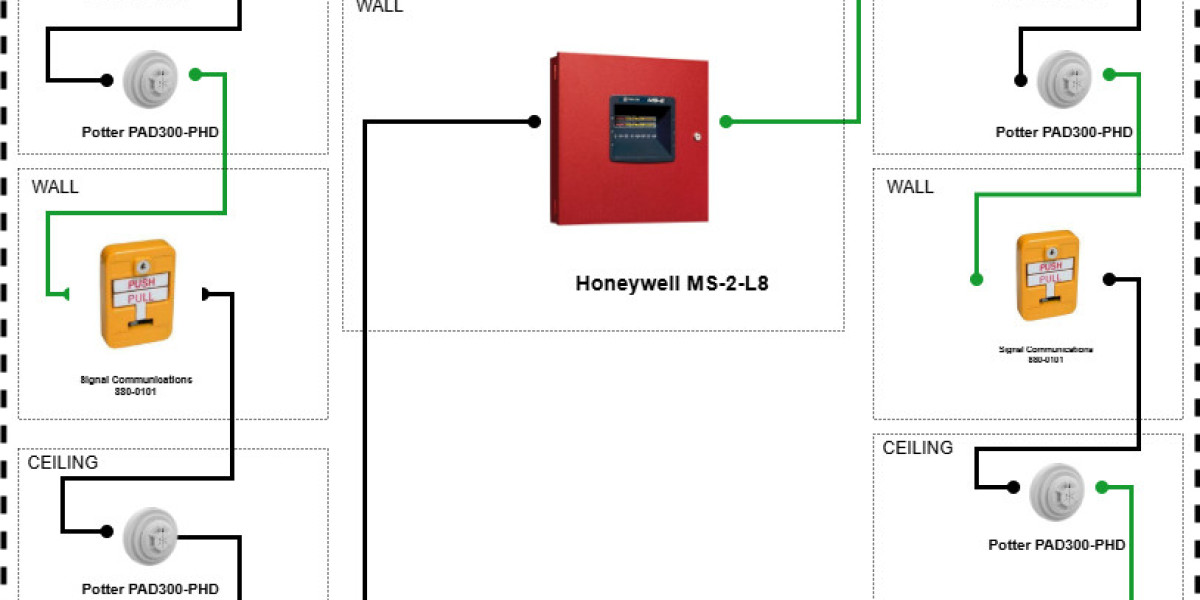

Professional fire alarm installation ensures that a building’s fire detection and notification system functions reliably and complies with safety regulations. In 2025, trained technicians follow a systematic process to install, test, and commission fire alarm systems in homes, offices, and commercial buildings. This guide explains what happens during a professional fire alarm installation.
Initial Assessment and Planning
A certified fire alarm installer begins by assessing the building layout, identifying high-risk areas such as kitchens, storage rooms, mechanical rooms, and exit routes.
The installer reviews local fire safety codes, NFPA 72 standards, and insurance requirements to determine the appropriate type of fire alarm system.
A detailed installation plan is created, including the number and type of detectors, manual call points, notification devices, and control panel placement.
System Design and Layout
Detectors are mapped on building plans, ensuring proper coverage for every room, corridor, and open space.
Zones are defined for conventional or addressable systems to organize monitoring and reporting.
Wiring routes are planned for wired systems, while wireless systems are assessed for signal strength and device pairing requirements.
Notification devices such as sirens, bells, and strobe lights are strategically placed for maximum audibility and visibility.
Installation Process
1. Mounting Detectors and Alarms
Smoke detectors are mounted on ceilings or high walls, away from vents, fans, or areas prone to steam and dust.
Heat detectors are installed in kitchens, boiler rooms, garages, and other areas where smoke detectors may produce false alarms.
Manual call points are installed near exits, corridors, and high-traffic areas for quick access during emergencies.
Notification devices are positioned to alert all occupants effectively, considering building size and layout.
2. Installing the Control Panel
The fire alarm control panel is placed in a secure, accessible location, often near a main entrance or security office.
Primary power supply, backup batteries, and communication lines are connected to ensure continuous operation.
Panels are configured to monitor zones, devices, and notifications according to the building’s safety plan.
3. Wiring and Connectivity
Wired Systems: Cables are routed neatly through conduits, ceilings, or walls, connecting detectors, alarms, and manual call points to the control panel.
Wireless Systems: Devices are paired with the central hub or control panel, with signal strength and connectivity tested to ensure reliable communication.
Hybrid Systems: Both wired and wireless devices are integrated seamlessly to provide full coverage and redundancy.
4. Testing and Commissioning
Each detector is individually tested to confirm functionality and alarm activation.
Notification devices are activated to verify audibility and visibility throughout the building.
Control panels are tested for accurate monitoring, zone reporting, and alarm triggering.
Battery backup and emergency power systems are checked to ensure operation during outages.
Detailed commissioning reports are prepared for compliance and maintenance records.
Professional Installation Advantages
Ensures compliance with NFPA 72, local codes, and insurance requirements.
Minimizes risk of false alarms through proper detector placement and system calibration.
Provides documented installation records and certification for audits and inspections.
Allows integration of advanced technologies such as mesh networking, IoT monitoring, and AI-based false alarm reduction.
Common Challenges Handled by Professionals
Complex building layouts with multiple floors and zones.
Retrofitting fire alarm systems in existing structures without causing damage.
Ensuring wireless signal reliability in dense or metal-heavy environments.
Coordinating with building management and security teams to avoid operational disruptions.
Conclusion
Professional fire alarm installation in 2025 is a structured process that combines planning, technology, and compliance. From initial assessment to testing and commissioning, trained technicians ensure that detectors, alarms, and control panels function correctly and provide early fire detection. Hiring professionals guarantees safety, minimizes false alarms, ensures legal compliance, and gives building owners confidence that their fire alarm system will perform reliably when it matters most.
Read more: https://techwaveav.alboompro.com/post/how-to-install-a-fire-alarm-control-panel