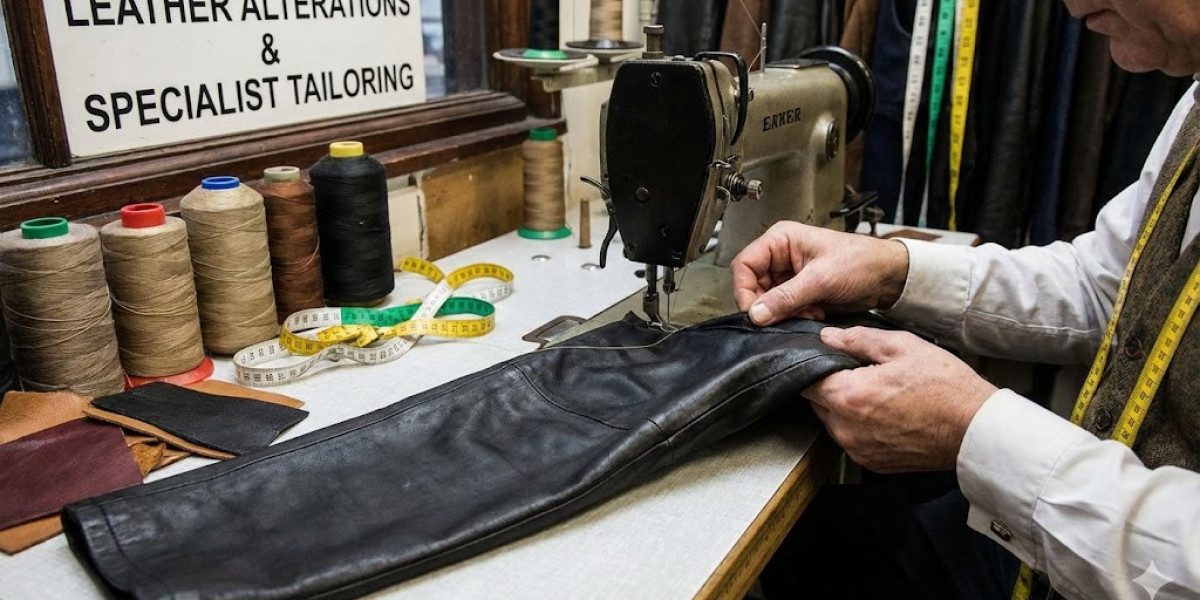

Leather trousers represent your style. They are defined by their fit—the way the hide drapes, the precise length over the shoe, and the clean line of the leg. However, achieving this flawless silhouette often requires expert modification. Due to the unique nature of leather, alterations like leather trouser tapering or leather trouser length shortening are high-stakes procedures that should never be attempted by a general seamstress.
The Immutable Laws of Leather Alteration
The fundamental difference between tailoring fabric trousers and leather trousers lies in the unyielding nature of the hide itself. This reality necessitates a specialist approach:
The Permanence of the Needle Hole: This is the golden rule of leather work. Every single needle hole created by a machine is visible and irreversible. Unlike fabric, where errant stitching can be unpicked and pressed away, any mistake made during the mark-up or stitching phase of Leather Trouser Tapering cannot be corrected.
The Surgical Re-stitching
The new taper requires the specialist to re-stitch a large section of the leg. To manage the unyielding hide and achieve a perfect line, B X Tailor And Alteration may utilize:
Adhesive Pre-Stitching: Specialized leather adhesive or tape is often used to temporarily hold the trimmed edges together perfectly before stitching. This prevents the leather from stretching or slipping under the machine needle, ensuring a straight, professional seam.
Perfect Thread Tension: The tailor must precisely adjust the industrial machine’s thread tension to ensure the stitch is tight enough to hold the seam under stress but loose enough not to cause the leather to pucker or bunch.
Finishing the Seam
Once the new seam is secured, the excess hide is trimmed. Unlike fabric, the raw leather edge cannot be left untreated. The specialist must secure the raw cut edge internally, often by carefully skiving (thinning) the excess material and securing it to the lining or applying specialized tape to maintain a smooth, comfortable internal finish. A poorly managed tapered seam will compromise the fit and be permanently visible.
Leather Trouser Length Shortening – Mastering the Hem
While seemingly a standard alteration, leather trouser length shortening is fraught with technical difficulties unique to the material, making it one of the most common reasons clients seek out a leather specialist.
The Importance of Precision Measurement
The process begins with a precise measurement, determining the perfect break over the client’s shoe. This is critical because the density of the leather means the hem will not "drape" or "roll" as easily as fabric; the final length must be exact.
Replication of Original Stitching
Most leather trousers feature decorative and structural single or double topstitching around the hem. B X Tailor And Alteration ’s expertise lies in perfectly replicating this detail. This means:
Matching Thread and Gauge: The new stitching must match the original thread type, colour, and thickness used by the manufacturer.
Flawless Parallel Lines: If double-stitching is required, the lines must be perfectly parallel and spaced, executed flawlessly by the specialized machine to prevent an amateur, obvious finish.
The Meticulous Hem Finish
The raw, cut edge of the leather must be expertly finished before the hem is secured. A specialist will avoid folding the hem over multiple times, as this creates excessive, unsightly bulk in the heavy hide.
The B X Tailor And Alteration Guarantee: Consultation and Investment Protection
Due to the permanent nature of leather trouser tapering and leather trouser length shortening, B X Tailor And Alteration insists on a thorough consultation process. This is where the specialist takes precise measurements, discusses the desired break and silhouette, and advises on the feasibility of the modification based on the hide type.